Your commute is not just a trip. In Fairfield County, it shapes where you live, how you spend your mornings, and what kind of home actually fits your week. If you are weighing a move from the city, relocating within the region, or trying to balance office days with work-from-home flexibility, the right choice starts with understanding your commute lifestyle. Let’s dive in.
Start With Your Weekly Routine
Before you narrow your home search, it helps to define how you actually travel. A five-day Manhattan commuter, a hybrid professional, and someone who drives to Stamford will usually need very different setups.
In Fairfield County, the main commute patterns tend to fall into three buckets: rail-first, highway-first, and hybrid. The region is shaped by Metro-North service into Grand Central, the I-95 and Merritt Parkway driving corridors, and a park-and-ride network that supports mixed-mode commuting.
That means the "best" town is often the one that fits your schedule, not the one with the shortest headline travel time. When you choose based on how you really live, your home search becomes much more focused.
Rail-First Living in Fairfield County
For many buyers, train access is the clearest priority. If you go into Manhattan often and want a more predictable routine, living near a Metro-North station can make daily life simpler.
The New Haven Line remains the backbone of this lifestyle. Based on current east-of-Hudson schedules effective March 29, 2026, the line runs through Greenwich, Stamford, Darien, Norwalk, Westport, Fairfield, Bridgeport, and Stratford. Separate branch schedules serve New Canaan, Danbury, and Waterbury.
What Main-Line Service Looks Like
Peak headways on the New Haven Line are about 25 to 30 minutes. That frequency gives many buyers a more forgiving schedule, especially if you need regular access to New York City.
Branch-line living can work well too, but it usually requires more planning. Peak headways are about 30 minutes on the New Canaan Branch and 45 minutes on the Danbury and Waterbury branches, so those locations can feel more schedule-sensitive.
Why Stamford Stands Out
Stamford is one of the region’s strongest rail anchors. The city says Stamford Transportation Center handles more than 8.5 million riders a year and is the second-busiest Metro-North station after Grand Central. It is also served by Metro-North, Amtrak, and intercity bus service.
If you want strong transit infrastructure and a more connected, mixed-use environment, Stamford deserves a close look. Its housing profile also supports that identity, with an owner-occupied housing rate of 48.8% and a broadband subscription rate of 94.2%.
Train Town Does Not Mean One-Size-Fits-All
Even among coastal towns with rail access, commute profiles vary. Mean travel times to work in Greenwich, Fairfield, Darien, and Westport are 29.6, 32.9, 38.6, and 40.9 minutes respectively.
That is a helpful reminder that train access is a lifestyle category, not a guarantee of the shortest total commute. The real advantage is often consistency and ease, especially if your destination is Manhattan and your schedule is fairly fixed.
Highway-First Living and Flexibility
Not every buyer needs to live by a station. If your work takes you across lower Fairfield County, into Stamford, or to places where rail is less central, a highway-first approach may be the better fit.
The key driving corridors are I-95 and the Merritt Parkway. CTDOT describes the Merritt as a commuter corridor running from Greenwich to Stratford and paralleling I-95, and the Fairfield and Bridgeport I-95 segment carries about 130,000 vehicles per day.
When Driving Makes More Sense
If your office is in Stamford or another lower Fairfield County job center, maximizing rail convenience may not always be necessary. In some cases, a location with easier highway access, more parking, or a simpler drive can make your week run more smoothly.
This can be especially true if your schedule changes day to day. A car-based routine may offer more flexibility, though it can also mean more exposure to traffic timing and weather-related slowdowns.
What Inland Buyers Often Gain
For some buyers, inland Fairfield County offers a different value equation. You may find more parking, more lot size, or more house for your budget than you would closer to the shoreline or a main-line station.
That tradeoff often comes with longer commute times. For example, New Fairfield’s mean travel time to work is 42.3 minutes, compared with Connecticut’s statewide average of 26.5 minutes.
Park-and-Ride as a Middle Ground
Some of the most practical commute setups are neither fully rail-first nor fully car-first. Park-and-ride can give you a blended routine that works well if you want more housing flexibility without giving up train access entirely.
CTDOT maintains park-and-ride lots in Fairfield, Norwalk, Stamford, Trumbull, Westport, and Wilton. For buyers who do not want to live directly at a station, these lots can create a useful middle path.
Who This Lifestyle Fits Best
A park-and-ride routine can work well if you want a quieter residential setting, easier parking at home, or more options in your price range. It can also suit buyers whose office schedule changes from week to week.
You still need to test the routine in real conditions. Departure time matters, and both rail schedules and road traffic can shift the experience more than buyers expect.
Hybrid Living Changes the Search
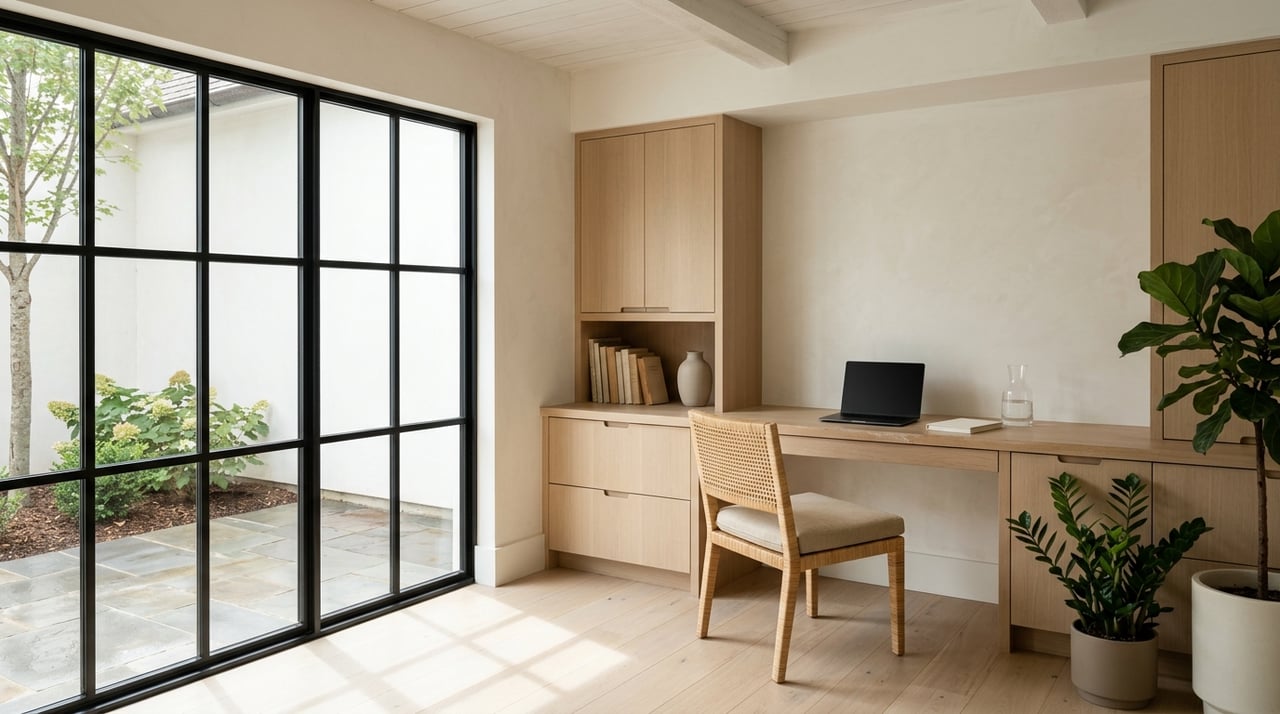
If you work from home part of the week, your commute lifestyle is no longer just about train time. The quality of your home setup becomes part of the decision.
Work-from-home remains meaningful. In 2022, 15.2% of U.S. workers worked from home, which makes broadband reliability and usable space more important in a home search.
Broadband Matters More Than Buyers Expect
Fairfield County communities show strong broadband subscription rates. Census QuickFacts reports rates of 98.5% in Westport, 97.7% in New Canaan, 96.9% in Darien, 96.1% in Greenwich, and 94.2% in Stamford.
For hybrid buyers, that is more than a nice-to-have. A reliable connection supports daily work, video calls, and the flexibility to stay productive when you are not heading into the office.
Space and Ownership Patterns
The suburban towns also show higher owner-occupied housing shares, including Westport at 88.8%, New Canaan at 83.7%, Darien at 82.4%, and Greenwich at 70.0%. Stamford, by contrast, is more mixed at 48.8% owner-occupied.
Those patterns suggest different lifestyle fits. If you are hybrid, you may want to prioritize a dedicated office, practical parking, and day-to-day comfort before you focus only on shaving a few minutes off the train.
How to Choose the Right Commute Lifestyle
The most effective home search starts with honest planning. Instead of asking which town is best, ask which routine you can sustain comfortably.
A simple framework can help:
- If you commute to NYC three or more days a week: a rail-first location near the New Haven Line often keeps the routine simplest, and the MTA says monthly tickets are the most cost-effective option at that frequency.
- If your office is in Stamford or elsewhere in lower Fairfield County: a highway-first or park-and-ride setup may be more practical than paying for rail convenience you may not fully use.
- If you are mostly remote: prioritize broadband, home office space, and parking ease first, then treat rail access as a secondary benefit.
This is where a more tailored home search matters. The right move is usually about matching your property, budget, and routine with clear eyes, not following a generic map.
Test the Commute Before You Buy
One of the smartest things you can do is test your commute in real life. Do not rely only on broad estimates or off-peak assumptions.
Use the exact departure window you would actually use on a normal workday. Metro-North fares are peak-sensitive, and train frequency changes by line, while highway conditions can look very different depending on the hour.
If you are comparing multiple towns, test each one the same way. That gives you a more realistic sense of your week and can quickly reveal which lifestyle feels easiest to maintain.
Why This Decision Affects More Than Travel Time
Your commute lifestyle influences more than transportation. It can affect the type of home you target, how much flexibility you have in your day, and where you place value in your budget.
For some buyers, that means paying a premium for direct rail access. For others, it means choosing more space, easier parking, or a better work-from-home setup and accepting a longer trip on office days.
The goal is not to copy someone else’s routine. It is to choose a Fairfield County lifestyle that supports how you actually want to live now and over the next several years.
If you are weighing neighborhoods, commute patterns, or a cross-border move between Connecticut and New York, working with an advisor who can balance lifestyle priorities with clear cost analysis can make the decision much easier. To talk through your options with a data-driven, high-touch approach, book a complimentary market consultation with Brenda Colon.
FAQs
How often do Metro-North trains run in Fairfield County?
- On current east-of-Hudson schedules effective March 29, 2026, peak headways are about 25 to 30 minutes on the New Haven Line, 30 minutes on the New Canaan Branch, and 45 minutes on the Danbury and Waterbury branches.
Is Stamford a good choice for commuters in Fairfield County?
- Stamford is a major regional transit hub with more than 8.5 million riders a year at Stamford Transportation Center, plus service from Metro-North, Amtrak, and intercity buses.
What is the best Fairfield County option if I drive to work?
- Buyers who drive often may prefer locations with stronger access to I-95, the Merritt Parkway, or nearby park-and-ride lots, depending on where they work and how often they need flexibility.
Are there park-and-ride options in Fairfield County?
- Yes. CTDOT maintains park-and-ride lots in Fairfield, Norwalk, Stamford, Trumbull, Westport, and Wilton.
What should hybrid buyers prioritize in Fairfield County?
- If you work from home part of the week, it makes sense to prioritize broadband reliability, a usable home office, and parking convenience before optimizing only for the shortest train ride to New York City.
When does a Metro-North monthly ticket make sense for Fairfield County commuters?
- The MTA says monthly tickets are the most cost-effective option for riders commuting three or more days a week.
How can I test a Fairfield County commute before buying a home?
- Try the exact departure window you would use in real life, because train fares, train frequency, and road traffic all vary by time of day.